Did You Know…World War II Began On September 1, 1939?
The history fans out there will know that World War II broke out in earnest when the German Army invaded Poland on September 1, 1939 – an event that took place 79 years ago today.
In marking the anniversary of this historic event, I’m going to recommend a number of titles you can check to learn more about what went on during the World War II era, which can be seen as starting at the end of World War I with the signing of the Treaty of Versailles and running through U.S forces dropping atomic bombs on Hiroshima and Nagasaki and the subsequent Japanese surrender in August of 1945.
And, disclaimer alert, this librarian was indeed a history major in college – so you may find this posting is longer than usual!
And I would like to note before I start, that there are many, many, many great books out there that chronicle the events and the lives of people that lived and fought through the World War II era – so my list of suggestions – is simply a short list of selected titles.
Books:
Fiction:
The Book Thief by Markus Zusak:

The extraordinary #1 New York Times bestseller that is now a major motion picture, Markus Zusak’s unforgettable story is about the ability of books to feed the soul.
When Death has a story to tell, you listen.
It is 1939. Nazi Germany. The country is holding its breath. Death has never been busier, and will become busier still.
Liesel Meminger is a foster girl living outside of Munich, who scratches out a meager existence for herself by stealing when she encounters something she can’t resist–books. With the help of her accordion-playing foster father, she learns to read and shares her stolen books with her neighbors during bombing raids as well as with the Jewish man hidden in her basement.
In superbly crafted writing that burns with intensity, award-winning author Markus Zusak, author of I Am the Messenger, has given us one of the most enduring stories of our time.
The Boy in the Striped Pajamas by John Boyne:

Berlin, 1942: When Bruno returns home from school one day, he discovers that his belongings are being packed in crates. His father has received a promotion and the family must move to a new house far, far away, where there is no one to play with and nothing to do. A tall fence stretches as far as the eye can see and cuts him off from the strange people in the distance.
But Bruno longs to be an explorer and decides that there must be more to this desolate new place than meets the eye. While exploring his new environment, he meets another boy whose life and circumstances are very different from his own, and their meeting results in a friendship that has devastating consequences.
The Bridge Over the River Kwai by Pierre Boulle:

1942: Boldly advancing through Asia, the Japanese need a train route from Burma going north. In a prison camp, British POWs are forced into labor. The bridge they build will become a symbol of service and survival to one prisoner, Colonel Nicholson, a proud perfectionist. Pitted against the warden, Colonel Saito, Nicholson will nevertheless, out of a distorted sense of duty, aid his enemy. While on the outside, as the Allies race to destroy the bridge, Nicholson must decide which will be the first casualty: his patriotism or his pride.
Captain Corelli’s Mandolin by Louis de Bernieres:

Extravagant, inventive, emotionally sweeping, Corelli’s Mandolin is the story of a timeless place that one day wakes up to find itself in the jaws of history. The place is the Greek island of Cephallonia, where gods once dabbled in the affairs of men and the local saint periodically rises from his sarcophagus to cure the mad. Then the tide of World War II rolls onto the island’s shores in the form of the conquering Italian army.
Caught in the occupation are Pelagia, a willful, beautiful young woman, and the two suitors vying for her love: Mandras, a gentle fisherman turned ruthless guerilla, and the charming, mandolin-playing Captain Corelli, a reluctant officer of the Italian garrison on the island. Rich with loyalties and betrayals, and set against a landscape where the factual blends seamlessly with the fantastic, Corelli’s Mandolin is a passionate novel as rich in ideas as it is genuinely moving.
Charlotte Gray by Sebastian Faulks:
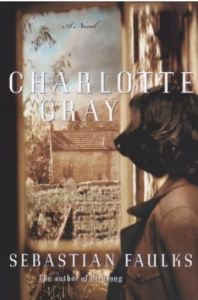
Charlotte Gray tells the remarkable story of a young Scottish woman who becomes caught up in the effort to liberate Occupied France from the Nazis while pursuing a perilous mission of her own.
In blacked-out, wartime London, Charlotte Gray develops a dangerous passion for a battle-weary RAF pilot, and when he fails to return from a daring flight into France she is determined to find him. In the service of the Resistance, she travels to the village of Lavaurette, dyeing her hair and changing her name to conceal her identity. Here she will come face-to-face with the harrowing truth of what took place during Europe’s darkest years, and will confront a terrifying secret that threatens to cast its shadow over the remainder of her days. Vividly rendered, tremendously moving, and with a narrative sweep and power reminiscent of his novel Birdsong, Charlotte Gray confirms Sebastian Faulks as one of the finest novelists working today.
Eye of the Needle by Ken Follett:
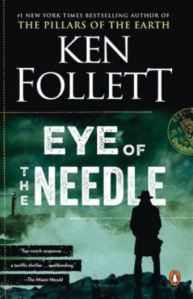
The worldwide phenomenon from the bestselling author of The Pillars of the Earth, World Without End, and A Column of Fire
His code name was “The Needle.” He was a German aristocrat of extraordinary intelligence—a master spy with a legacy of violence in his blood, and the object of the most desperate manhunt in history. . . .
But his fate lay in the hands of a young and vulnerable English woman, whose loyalty, if swayed, would assure his freedom—and win the war for the Nazis. . . .
The Guernsey Literary and Potato Peel Pie Society by Annie Barrows and Mary Ann Shaffer:
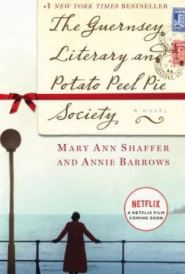
“I wonder how the book got to Guernsey? Perhaps there is some sort of secret homing instinct in books that brings them to their perfect readers.” January 1946: London is emerging from the shadow of the Second World War, and writer Juliet Ashton is looking for her next book subject. Who could imagine that she would find it in a letter from a man she’s never met, a native of the island of Guernsey, who has come across her name written inside a book by Charles Lamb. . . .
As Juliet and her new correspondent exchange letters, Juliet is drawn into the world of this man and his friends—and what a wonderfully eccentric world it is. The Guernsey Literary and Potato Peel Pie Society—born as a spur-of-the-moment alibi when its members were discovered breaking curfew by the Germans occupying their island—boasts a charming, funny, deeply human cast of characters, from pig farmers to phrenologists, literature lovers all.
Juliet begins a remarkable correspondence with the society’s members, learning about their island, their taste in books, and the impact the recent German occupation has had on their lives. Captivated by their stories, she sets sail for Guernsey, and what she finds will change her forever.
Written with warmth and humor as a series of letters, this novel is a celebration of the written word in all its guises and of finding connection in the most surprising ways.
The Guns of Navarone by Alistair Maclean:

The classic World War II thriller from the acclaimed master of action and suspense. Now reissued in a new cover style.
Twelve hundred British soldiers isolated on the small island of Kheros off the Turkish coast, waiting to die. Twelve hundred lives in jeopardy, lives that could be saved if only the guns could be silenced. The guns of Navarone, vigilant, savage and catastrophically accurate. Navarone itself, grim bastion of narrow straits manned by a mixed garrison of Germans and Italians, an apparently impregnable iron fortress. To Captain Keith Mallory, skllled saboteur, trained mountaineer, fell the task of leading the small party detailed to scale the vast, impossible precipice of Navarone and to blow up the guns. The Guns of Navarone is the story of that mission, the tale of a calculated risk taken in the time of war…
The Naked And The Dead by Norman Mailer:

Hailed as one of the finest novels to come out of the Second World War, The Naked and the Dead received unprecedented critical acclaim upon its publication and has since become part of the American canon. This fiftieth anniversary edition features a new introduction created especially for the occasion by Norman Mailer.
Written in gritty, journalistic detail, the story follows an army platoon of foot soldiers who are fighting for the possession of the Japanese-held island of Anopopei. Composed in 1948, The Naked and the Dead is representative of the best in twentieth-century American writing.
The Night Watch by Sarah Waters: Moving back through the 1940s, through air raids, blacked-out streets, illicit partying, and sexual adventure, to end with its beginning in 1941, The Night Watchtells the story of four Londoners—three women and a young man with a past—whose lives, and those of their friends and lovers, connect in tragedy, stunning surprise and exquisite turns, only to change irreversibly in the shadow of a grand historical event.
War and Remembrance by Herman Wouk:

War and Remembrance is the sequel to the Winds of War and picks up the story of the Henry & Jastrow Families in early 1942. The book chronicles the lives of the main characters from 1942 until just after the Atomic Bombs are dropped on Hiroshima and Nagasaki in August of 1945.
Captain Victor Henry, later Admiral Henry remains a source of information for President Roosevelt while continuing to work at a variety of presidentially assigned tasks. The younger Henry son becomes a submariner. Eldest son and navy aviator Warren serves in the Pacific theatre of operations and daughter Madeline continues her work radio.
And in Europe, and in increasingly precarious situations, Byron’s wife Natalie Jastrow Henry and her uncle – Aaron Jastrow, try desperately to escape the advancing German Army as it moves out across Europe.
The events of the Holocaust are also featured as is a series of writings by a German army office – Armin Von Roon who offers the German point of view about the reasons for the war and why German collectively did what it did. The Von Roon writings are interspersed in the book and are written years after the war when Von Roon is serving a prison sentence for war crimes.
So a great deal goes on in this book. And it is a great book, but it is very, very long – just FYI.
When the Emperor Was Divine by Julie Otsuka:

The debut novel from the PEN/Faulkner Award Winning Author of The Buddha in the Attic
On a sunny day in Berkeley, California, in 1942, a woman sees a sign in a post office window, returns to her home, and matter-of-factly begins to pack her family’s possessions. Like thousands of other Japanese Americans they have been reclassified, virtually overnight, as enemy aliens and are about to be uprooted from their home and sent to a dusty internment camp in the Utah desert.
In this lean and devastatingly evocative first novel, Julie Otsuka tells their story from five flawlessly realized points of view and conveys the exact emotional texture of their experience: the thin-walled barracks and barbed-wire fences, the omnipresent fear and loneliness, the unheralded feats of heroism. When the Emperor Was Divine is a work of enormous power that makes a shameful episode of our history as immediate as today’s headlines.
The Winds of War by Herman Wouk:
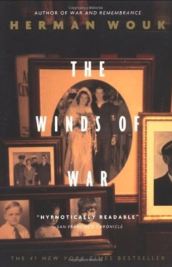
As the book opens, the family patriarch, Navy Commander Victor “Pug” Henry and his wife Rhoda are setting sail for Germany. Pug Henry is to take up a new post as a naval attache at the Americna Embassy in Berlin. The Henry’s have three children. Their younger song Byron has just landed in Italy where he accepts a job to work for an American professor named Aaron Jastrow. Professor Jastrow’s niece Natalie is also in residence.
The other two Henry children are in the U.S., Eldest son Warren is a navy aviator and daughter Madeline a recent high school graduate.
During the story historical events interweave with the lives of the main characters – Byron and Natalie wind up at a Jastrow family wedding in Poland on September 1, 1939 and must flee across the country as the German army invades. Pug files a report on German combat readiness that reaches President Roosevelt and then becomes an unofficial source of information for the President and meets Hitler, Churchill, Stalin and Mussolini along the way, and even takes ride of Berlin on a RAF Bomber to see how the new technology of RADAR is working for the British Military. The first book ends just after the Japanese attack on Pearl Harbor and the second book – the much more lengthy War and Remembrance picks up the story.
The Women in the Castle: A Novel by Jessica Shattuck:

Three German “widow[s] of the resistance,” who spend time together at a run-down castle when World War II ends, embody aspects of the catastrophe that overcame their country.Germany, 1945: in this devastated landscape where “no one was innocent,” there is misery for all and plenty to spare. Guilt, shame, suffering, and silence go hand in hand as the German people emerge from war and fascism, and Europe is awash with displaced persons. Shattuck’s (Perfect Life, 2009, etc.) third novel centers on the von Lingenfels castle, a place of aristocratic indulgence in prewar years, now a ruined shell owned by Marianne von Lingenfels, the widow of Albrecht, one of a group of men who failed in an attempt to assassinate Hitler and were hanged. It’s this group which links Marianne to the two other women and their children, whom she invites to the castle for shelter: Benita Fledermann, widow of the charismatic Constantine, who survived the Russian occupation of Berlin but paid a heavy price; and Ania Grabarek, who walked west, out of the wreckage of Poland, with her two sons and is also keeping secrets about what she has seen and done.
In this primer about how evil invades then corrupts normal existence, Shattuck delivers simple, stark lessons on personal responsibility and morality. Inevitably, it makes for a dark tale, more a chronology of three overlapping, contaminated, emblematic lives than a plot. Some final uplift does arrive, however, via the views of the next generation, which apply a useful layer of distance and some hope on the sins of the fathers—and mothers. Neither romantic nor heroic, Shattuck’s new novel seems atypical of current World War II fiction but makes sincere, evocative use of family history to explore complicity and the long arc of individual responses to a mass crime. Kirkus Review.
Non-Fiction:
Band of Brothers by Stephen E. Ambrose:

Stephen E. Ambrose’s iconic New York Times bestseller about the ordinary men who became the World War II’s most extraordinary soldiers: Easy Company, 506th Parachute Infantry Regiment, 101st Airborne Division, US Army. They came together, citizen soldiers, in the summer of 1942, drawn to Airborne by the $50 monthly bonus and a desire to be better than the other guy. And at its peak—in Holland and the Ardennes—Easy Company was as good a rifle company as any in the world.
From the rigorous training in Georgia in 1942 to the disbanding in 1945, Stephen E. Ambrose tells the story of this remarkable company. In combat, the reward for a job well done is the next tough assignment, and as they advanced through Europe, the men of Easy kept getting the tough assignments. They parachuted into France early D-Day morning and knocked out a battery of four 105 mm cannon looking down Utah Beach; they parachuted into Holland during the Arnhem campaign; they were the Battered Bastards of the Bastion of Bastogne, brought in to hold the line, although surrounded, in the Battle of the Bulge; and then they spearheaded the counteroffensive. Finally, they captured Hitler’s Bavarian outpost, his Eagle’s Nest at Berchtesgaden.
They were rough-and-ready guys, battered by the Depression, mistrustful and suspicious. They drank too much French wine, looted too many German cameras and watches, and fought too often with other GIs. But in training and combat they learned selflessness and found the closest brotherhood they ever knew. They discovered that in war, men who loved life would give their lives for them.
This is the story of the men who fought, of the martinet they hated who trained them well, and of the captain they loved who led them. E Company was a company of men who went hungry, froze, and died for each other, a company that took 150 percent casualties, a company where the Purple Heart was not a medal—it was a badge of office.
Beyond Band of Brothers: The War Memoirs of Major Dick Winters by Dick Winters and Cole C. Kingseed:
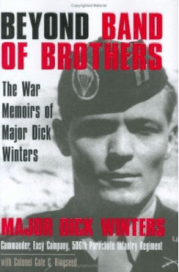
“Tells the tales left untold by Stephen Ambrose, whose Band of Brothers was the inspiration for the HBO miniseries….laced with Winters’s soldierly exaltations of pride in his comrades’ bravery.”—Publishers Weekly
They were called Easy Company—but their mission was never easy. Immortalized as the Band of Brothers, they suffered 150% casualties while liberating Europe—an unparalleled record of bravery under fire. Winner of the Distinguished Service Cross, Dick Winters was their legendary commander. This is his story—told in his own words for the first time. On D-Day, Winters assumed leadership of the Band of Brothers when its commander was killed and led them through the Battle of the Bulge and into Germany—by which time each member had been wounded.
Based on Winters’s wartime diary, Beyond Band of Brothers also includes his comrades’ untold stories. Virtually none of this material appeared in Stephen Ambrose’s Band of Brothers. Neither a protest against nor a glamorization of war, this is a moving memoir by the man who earned the love and respect of the men of Easy Company—and who is a hero to new generations worldwide.
Born Survivors: Three Young Mothers and Their Extraordinary Story of Courage, Defiance, and Hope by Wendy Holden:
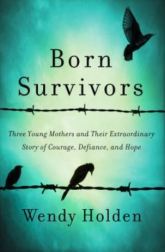
The Nazis murdered their husbands but concentration camp prisoners Priska, Rachel, and Anka would not let evil take their unborn children too—a remarkable true story that will appeal to readers of The Lost and The Nazi Officer’s Wife, Born Survivors celebrates three mothers who defied death to give their children life.
Eastern Europe, 1944: Three women believe they are pregnant, but are torn from their husbands before they can be certain. Rachel is sent to Auschwitz, unaware that her husband has been shot. Priska and her husband travel there together, but are immediately separated. Also at Auschwitz, Anka hopes in vain to be reunited with her husband. With the rest of their families gassed, these young wives are determined to hold on to all they have left—their lives, and those of their unborn babies. Having concealed their condition from infamous Nazi doctor Josef Mengele, they are forced to work and almost starved to death, living in daily fear of their pregnancies being detected by the SS.
In April 1945, as the Allies close in, Priska gives birth. She and her baby, along with Anka, Rachel, and the remaining inmates, are sent to Mauthausen concentration camp on a hellish seventeen-day train journey. Rachel gives birth on the train, and Anka at the camp gates. All believe they will die, but then a miracle occurs. The gas chamber runs out of Zyklon-B, and as the Allied troops near, the SS flee. Against all odds, the three mothers and their newborns survive their treacherous journey to freedom.
On the seventieth anniversary of Mauthausen’s liberation from the Nazis by American soldiers, renowned biographer Wendy Holden recounts this extraordinary story of three children united by their mothers’ unbelievable—yet ultimately successful—fight for survival.
The Destruction of the European Jews by Raul Hilberg:
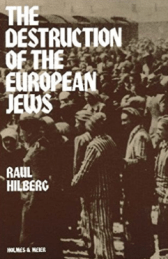
This student edition of The Destruction of the European Jews makes accessible for classroom use Raul Hilberg s landmark account of Germany s annihilation of Europe s Jewish communities in 1933 1945. Perhaps more than any other book, it answers the question: How did it happen? This is an adult level book and easy to read as far as the text is considered – the subject matter is, of course, very dark.
Diary of a Young Girl by Anne Frank:

Discovered in the attic in which she spent the last years of her life, Anne Frank’s remarkable diary has become a world classic—a powerful reminder of the horrors of war and an eloquent testament to the human spirit. In 1942, with the Nazis occupying Holland, a thirteen-year-old Jewish girl and her family fled their home in Amsterdam and went into hiding. For the next two years, until their whereabouts were betrayed to the Gestapo, the Franks and another family lived cloistered in the “Secret Annexe” of an old office building. Cut off from the outside world, they faced hunger, boredom, the constant cruelties of living in confined quarters, and the ever-present threat of discovery and death. In her diary Anne Frank recorded vivid impressions of her experiences during this period. By turns thoughtful, moving, and surprisingly humorous, her account offers a fascinating commentary on human courage and frailty and a compelling self-portrait of a sensitive and spirited young woman whose promise was tragically cut short.
The Elie Wiesel Trilogy:
Elie Wiesel wrote three seminal books that illustrate his experiences during and after World War II. He was a teenager when he was sent to Auschwitz with his family. The books in the series are: Night, Dawn and Day. Night is a memoir in which Wiesel tells the story of his experiences in Auschwitz during the Holocaust. The second two books in the trilogy, Dawn and Day are fiction but follow the lives of Holocaust survivors after the war. And since the books are generally considered to be a trilogy – I’m going to list all three here – even though the second and third books in the trilogy are fiction titles.
Night by Elie Wiesel:

Night is Elie Wiesel’s masterpiece, a candid, horrific, and deeply poignant autobiographical account of his survival as a teenager in the Nazi death camps. This new translation by Marion Wiesel, Elie’s wife and frequent translator, presents this seminal memoir in the language and spirit truest to the author’s original intent. And in a substantive new preface, Elie reflects on the enduring importance of Night and his lifelong, passionate dedication to ensuring that the world never forgets man’s capacity for inhumanity to man. Night offers much more than a litany of the daily terrors, everyday perversions, and rampant sadism at Auschwitz and Buchenwald; it also eloquently addresses many of the philosophical as well as personal questions implicit in any serious consideration of what the Holocaust was, what it meant, and what its legacy is and will be.
Dawn by Elie Wiesel:
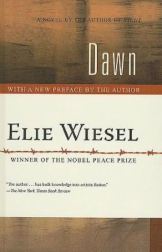
Elisha is a young Jewish man, a Holocaust survivor, and an Israeli freedom fighter in British-controlled Palestine; John Dawson is the captured English officer he will murder at dawn in retribution for the British execution of a fellow freedom fighter. The night-long wait for morning and death provides Dawn, Elie Wiesel’s ever more timely novel, with its harrowingly taut, hour-by-hour narrative. Caught between the manifold horrors of the past and the troubling dilemmas of the present, Elisha wrestles with guilt, ghosts, and ultimately God as he waits for the appointed hour and his act of assassination. Dawn is an eloquent meditation on the compromises, justifications, and sacrifices that human beings make when they murder other human beings.
Day by Elie Wiesel (All three books are contained in this one collection titled The Elie Wiesel Trilogy):
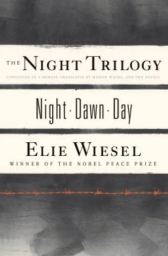
The publication of Day restores Elie Wiesel’s original title to the novel initially published in English as The Accident and clearly establishes it as the powerful conclusion to the author’s classic trilogy of Holocaust literature, which includes his memoir Night and novel Dawn. “In Night it is the ‘I’ who speaks,” writes Wiesel. “In the other two, it is the ‘I’ who listens and questions.” In its opening paragraphs, a successful journalist and Holocaust survivor steps off a New York City curb and into the path of an oncoming taxi. Consequently, most of Wiesel’s masterful portrayal of one man’s exploration of the historical tragedy that befell him, his family, and his people transpires in the thoughts, daydreams, and memories of the novel’s narrator. Torn between choosing life or death, Day again and again returns to the guiding questions that inform Wiesel’s trilogy: the meaning and worth of surviving the annihilation of a race, the effects of the Holocaust upon the modern character of the Jewish people, and the loss of one’s religious faith in the face of mass murder and human extermination.
Flags of Our Fathers by James Bradley & Ron Powers:
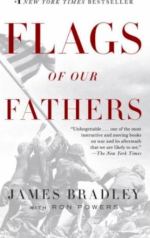
In February 1945, American Marines plunged into the surf at Iwo Jima—and into history. Through a hail of machine-gun and mortar fire that left the beaches strewn with comrades, they battled to the island’s highest peak. And after climbing through a landscape of hell itself, they raised a flag. Now the son of one of the flagraisers has written a powerful account of six very different young men who came together in a moment that will live forever. To his family, John Bradley never spoke of the photograph or the war. But after his death at age seventy, his family discovered closed boxes of letters and photos. In Flags of Our Fathers, James Bradley draws on those documents to retrace the lives of his father and the men of Easy Company. Following these men’s paths to Iwo Jima, James Bradley has written a classic story of the heroic battle for the Pacific’s most crucial island—an island riddled with Japanese tunnels and 22,000 fanatic defenders who would fight to the last man. But perhaps the most interesting part of the story is what happened after the victory. The men in the photo—three were killed during the battle—were proclaimed heroes and flown home, to become reluctant symbols. For two of them, the adulation was shattering. Only James Bradley’s father truly survived, displaying no copy of the famous photograph in his home, telling his son only: “The real heroes of Iwo Jima were the guys who didn’t come back.” Few books ever have captured the complexity and furor of war and its aftermath as well as Flags of Our Fathers. A penetrating, epic look at a generation at war, this is history told with keen insight, enormous honesty, and the passion of a son paying homage to his father. It is the story of the difference between truth and myth, the meaning of being a hero, and the essence of the human experience of war.
The Girls of the Atomic City by Denise Kiernan:

The incredible story of the young women of Oak Ridge, Tennessee, who unwittingly played a crucial role in one of the most significant moments in U.S. history.The Tennessee town of Oak Ridge was created from scratch in 1942. One of the Manhattan Project’s secret cities, it didn’t appear on any maps until 1949, and yet at the height of World War II it was using more electricity than New York City and was home to more than 75,000 people, many of them young women recruited from small towns across the South. Their jobs were shrouded in mystery, but they were buoyed by a sense of shared purpose, close friendships–and a surplus of handsome scientists and Army men! But against this vibrant wartime backdrop, a darker story was unfolding. The penalty for talking about their work–even the most innocuous details–was job loss and eviction. One woman was recruited to spy on her coworkers. They all knew something big was happening at Oak Ridge, but few could piece together the true nature of their work until the bomb “Little Boy” was dropped over Hiroshima, Japan, and the secret was out. The shocking revelation: the residents of Oak Ridge were enriching uranium for the atomic bomb. Though the young women originally believed they would leave Oak Ridge after the war, many met husbands there, made lifelong friends, and still call the seventy-year-old town home. The reverberations from their work there–work they didn’t fully understand at the time–are still being felt today.
In The Girls of Atomic City, Denise Kiernan traces the astonishing story of these unsung WWII workers through interviews with dozens of surviving women and other Oak Ridge residents. Like The Immortal Life of Henrietta Lacks, this is history and science made fresh and vibrant–a beautifully told, deeply researched story that unfolds in a suspenseful and exciting way.
The Eagle Unbowed: Poland and the Poles in the Second World War by Halik Kochanski:

Kochanski, a British military historian, integrates concise, clear, and persuasive campaign analyses with an account of the brutality suffered by Poles under German and Soviet occupation during WWII. She also examines the complex internal politics of Poland’s armed forces in exile, and Poland’s international position. She incorporates the creation and performance of the 1st Polish Army on the Eastern Front into a narrative that in most Western accounts is too often dominated by action in Italy and Northwest Europe. Her treatment of the Polish Resistance and the 1944 uprising is excellent. She also establishes the complex mix of operations, logistics, and politics behind the Allies’ limited support for the Home Army in Warsaw. Kochanski’s sympathies clearly lie with Poland’s exile government in London, but she neither conceals nor trivializes policies and decisions that often proved self-defeating. Kochanski also gives an account of the Holocaust and the thorny issue of Polish collaboration in it. Above all, this is a story of expedience: the critical decisions that had to be taken, the terrible role of sheer chance, …the simple desire to survive under the most difficult circumstances. And expedients, as Kochanski ably demonstrates, are not always wise.
In the Garden of Beasts: Love, Terror, and an American Family in Hitler’s Berlin by Erik Larson:

In 1933, President Roosevelt personally selected William E. Dodd to be the United States ambassador to Nazi Germany. Dodd took his family with him, including his daughter Martha. Initially enamored with the Nazi party and its passion, Martha supported the Third Reich. However, when Hitler’s violent policies became apparent, Martha changed her opinion and watched in horror. Here, author Erik Larson offers a chilling first-person account of Germany’s transformation under Hitler’s rule.
Irena’s Children by Tilar J. Mazzeo:
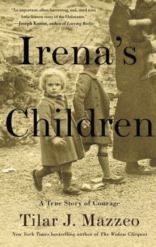
From the New York Times bestselling author of The Widow Clicquot comes an extraordinary and gripping account of Irena Sendler—the “female Oskar Schindler”—who took staggering risks to save 2,500 children from death and deportation in Nazi-occupied Poland during World War II.
In 1942, one young social worker, Irena Sendler, was granted access to the Warsaw ghetto as a public health specialist. While she was there, she began to understand the fate that awaited the Jewish families who were unable to leave. Soon she reached out to the trapped families, going from door to door and asking them to trust her with their young children. Driven to extreme measures and with the help of a network of local tradesmen, ghetto residents, and her star-crossed lover in the Jewish resistance, Irena ultimately smuggled thousands of children past the Nazis. She made dangerous trips through the city’s sewers, hid children in coffins, snuck them under overcoats at checkpoints, and slipped them through secret passages in abandoned buildings. But Irena did something even more astonishing at immense personal risk: she kept a secret list buried in bottles under an old apple tree in a friend’s back garden. On it were the names and true identities of these Jewish children, recorded so their families could find them after the war. She could not know that more than ninety percent of their families would perish.
Irena’s Children, “a fascinating narrative of…the extraordinary moral and physical courage of those who chose to fight inhumanity with compassion” (Chaya Deitsch author of Here and There: Leaving Hasidism, Keeping My Family), is a truly heroic tale of survival, resilience, and redemption.
The Nazi Officer’s Wife by Edith Hahn Beer and Susan Dworkin:
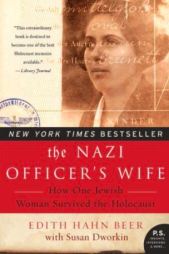
Edith Hahn was an outspoken young woman in Vienna when the Gestapo forced her into a ghetto and then into a slave labor camp. When she returned home months later, she knew she would become a hunted woman and went underground. With the help of a Christian friend, she emerged in Munich as Grete Denner. There she met Werner Vetter, a Nazi Party member who fell in love with her. Despite Edith’s protests and even her eventual confession that she was Jewish, he married her and kept her identity a secret. In wrenching detail, Edith recalls a life of constant, almost paralyzing fear. She tells how German officials casually questioned the lineage of her parents; how during childbirth she refused all painkillers, afraid that in an altered state of mind she might reveal something of her past; and how, after her husband was captured by the Soviets, she was bombed out of her house and had to hide while drunken Russian soldiers raped women on the street. Despite the risk it posed to her life, Edith created a remarkable record of survival. She saved every document, as well as photographs she took inside labor camps. Now part of the permanent collection at the Holocaust Memorial Museum in Washington, D.C., these hundreds of documents, several of which are included in this volume, form the fabric of a gripping new chapter in the history of the Holocaust—complex, troubling, and ultimately triumphant.
Prague Winter: A Personal Story of Remembrance and War, 1937-1948 by Madeleine Albright:
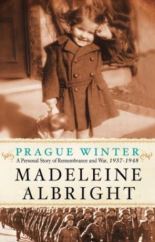
Drawing on her own memory, her parents’ written reflections, interviews with contemporaries, and newly-available documents, former US Secretary of State and New York Times bestselling author Madeleine Albright recounts a tale that is by turns harrowing and inspiring. Before she turned twelve, Madeleine Albright’s life was shaken by some of the most cataclysmic events of the 20th century: the Nazi invasion of her native Prague, the Battle of Britain, the attempted genocide of European Jewry, the allied victory in World War II, the rise of communism, and the onset of the Cold War.
In Prague Winter, Albright reflects on her discovery of her family’s Jewish heritage many decades after the war, on her Czech homeland’s tangled history, and on the stark moral choices faced by her parents and their generation. Often relying on eyewitness descriptions, she tells the story of how millions of ordinary citizens were ripped from familiar surroundings and forced into new roles as exile leaders and freedom fighters, resistance organizers and collaborators, victims and killers. These events of enormous complexity are shaped by concepts familiar to any growing child: fear, trust, adaptation, the search for identity, the pressure to conform, the quest for independence, and the difference between right and wrong.
Prague Winter is an exploration of the past with timeless dilemmas in mind, a journey with universal lessons that is simultaneously a deeply personal memoir and an incisive work of history. It serves as a guide to the future through the lessons of the past, as seen through the eyes of one of the international community’s most respected and fascinating figures. Albright and her family’s experiences provide an intensely human lens through which to view the most political and tumultuous years in modern history.
The Zookeeper’s Wife by Diane Ackerman:

A true story in which the keepers of the Warsaw Zoo saved hundreds of people from Nazi hands. After their zoo was bombed, Polish zookeepers Jan and Antonina Zabinski managed to save over three hundred people from the Nazis by hiding refugees in the empty animal cages. With animal names for these “guests,” and human names for the animals, it’s no wonder that the zoo’s code name became “The House Under a Crazy Star.” Best-selling naturalist and acclaimed storyteller Diane Ackerman combines extensive research and an exuberant writing style to re-create this fascinating, true-life story—sharing Antonina’s life as “the zookeeper’s wife,” while examining the disturbing obsessions at the core of Nazism. Winner of the 2008 Orion Award.
And as I’m running out of week here, I’m just going to put up the photos that link to the StarCat pages for the DVDs and you can read a description of the videos and request them from the StarCat page.
DVDs:
Fiction:
All The King’s Men (BBC):

Darkest Hour:

The Eagle Has Landed:

Foyle’s War:

Holocaust:

Land Girls:
Pearl Harbor:

The Purple Plain:

Sands of Iwo Jima:

The Tuskegee Airmen:
War and Remembrance: Part 1:

War and Remembrance The Final Chapter:

The Way Back:

The White Cliffs of Dover:
The Winds of War:

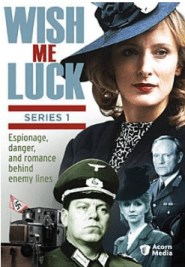
Wish Me Luck:
Non-Fiction (Documentary):
America and the Holocaust:

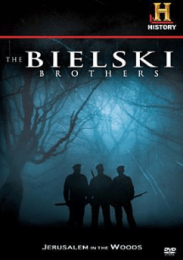
The Bielski Brothers:
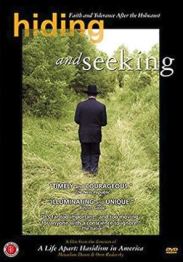
Hiding and Seeking: Faith and Tolerance After the Holocaust:
Holocaust Ravensbruck and Buchenwald:

Irena Sendler: In the Name of Their Mothers:

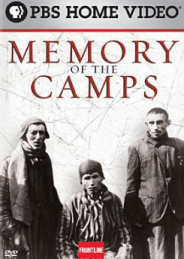
Memory of the Camps:
Time Of Fear:

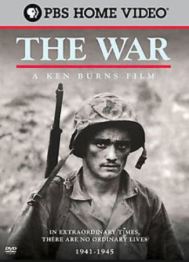
The War (Ken Burns):
Have a great Labor Day weekend!
Linda, SSCL






 Tech & Book Talk at SSCL